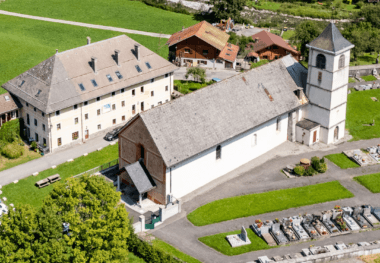
History of Glières-Val-de-Borne
From Entremont Priory to the Glières maquis: the history of Le Petit-Bornand and Entremont
Glières-Val-de-Borne was created on 1 January 2019 by merging two communes of the Borne valley: Le Petit-Bornand-les-Glières, its main village, and Entremont. It has 1,824 inhabitants (INSEE, 2023).
The Borne river runs through the commune between the Bornes massif and the Aravis range. The territory covers about 72 km² and rises from 591 m to 2,408 m at the Pic de Jallouvre. It includes part of the Plateau des Glières and Lake Lessy (1,733 m). In summer the herds go up to the alpine pastures: this is Reblochon AOP country.
Its heritage tells this story: the former Abbey of Entremont and its treasury, listed as a historic monument; the church and presbytery of Le Petit-Bornand; chapels in the hamlets; and, on the Plateau des Glières, Émile Gilioli's National Monument to the Resistance, unveiled in 1973.

Key dates
A priory at Entremont
Canons from the Abbey of Abondance set up a priory in the Borne valley.
The priory becomes an abbey
The priory is raised to an abbey. The community, an abbot and twelve canons, follows the Rule of Saint Augustine. In 1279 it joins the Congregation of Saint-Ruf.
Francis de Sales, parish priest of Le Petit-Bornand
The future Saint Francis de Sales serves as parish priest of Le Petit-Bornand.
Entremont's Baroque high altar
The high altar of Entremont church dates from 1685. It has been a listed historic object since 1904, together with the treasury's 12th-century reliquary shrine and 13th-century arm reliquary.
Feudal rights bought out, the abbey closes
In 1772 the inhabitants buy out their feudal dues and the abbey is suppressed. The last canons leave Entremont in 1776.
The presbytery of Le Petit-Bornand
Built to plans by Vagnat. Its façades, roofs and porch have been listed as a historic monument since 1985.
The Glières maquis and the valley
Tom Morel is killed at Entremont on the night of 9-10 March. From 24 March, German artillery positioned at Le Petit-Bornand shells the plateau. In the valley, residents who had helped the maquis are arrested, among them Father Truffy, deported to Dachau.
Glières-Val-de-Borne is born
On 1 January, Le Petit-Bornand-les-Glières and Entremont merge into a new commune, with its seat at Le Petit-Bornand.
Nine centuries of history in the Borne valley
Entremont Abbey
The history of Entremont Abbey begins around 1115, when canons from Abondance founded a priory in the valley. Raised to an abbey in 1154, it followed the Rule of Saint Augustine. The former abbey church is now the parish church of Notre-Dame-de-Tous-les-Saints. Its painted trompe-l'œil façade, restored in 1890 and again in 1987, its Gothic choir stalls and its treasury can be visited in summer. The treasury includes a 12th-century reliquary shrine and a 13th-century arm reliquary, listed as historic objects in 1904 along with the Baroque high altar of 1685. Since 2021, excavations led with the Université Savoie Mont Blanc have been uncovering remains of the cloister.
Le Petit-Bornand, from Francis de Sales to 1947
The parish of Le Petit-Bornand is thought to have been founded in 1152 by the canons of Entremont. Saint Francis de Sales was its parish priest from 1597 to 1598. In 1772 the inhabitants bought out their feudal dues. That same year Entremont Abbey was suppressed, and its last canons left in 1776. The presbytery of Le Petit-Bornand, built in 1782, is now a listed historic monument. In 1947 the commune took the name Le Petit-Bornand-les-Glières.
1944: the Glières maquis and the Borne valley
From 31 January to 26 March 1944, some 465 Resistance fighters held the Plateau des Glières, led by Lieutenant Tom Morel and then Captain Maurice Anjot. The valley was at the heart of events. On the night of 9-10 March, Tom Morel was killed at Entremont, at the Hôtel de France, where a headquarters of the Vichy mobile reserve police (GMR) was stationed. From 24 March, German artillery positioned at Le Petit-Bornand shelled the plateau. After the attack of 26 March, Captain Anjot ordered the withdrawal that evening. According to the Haute-Savoie Department, 129 fighters and 20 local residents were killed in combat, shot or deported. In the valley, residents who had helped the maquis were arrested. Among them, Father Jean Truffy, parish priest of Le Petit-Bornand, was deported to Dachau; he survived and came home. Today the Sentier des Patriotes trail starts from Le Petit-Bornand church and climbs to the plateau.
2019: Glières-Val-de-Borne
On 1 January 2019, Le Petit-Bornand-les-Glières and Entremont joined to form a new commune, Glières-Val-de-Borne, with its seat at Le Petit-Bornand. The name brings together the Plateau des Glières and the Borne valley. Each village keeps its own landmarks: Entremont around its former abbey, Le Petit-Bornand around its church and hamlets.
Chapels, hamlets and trails
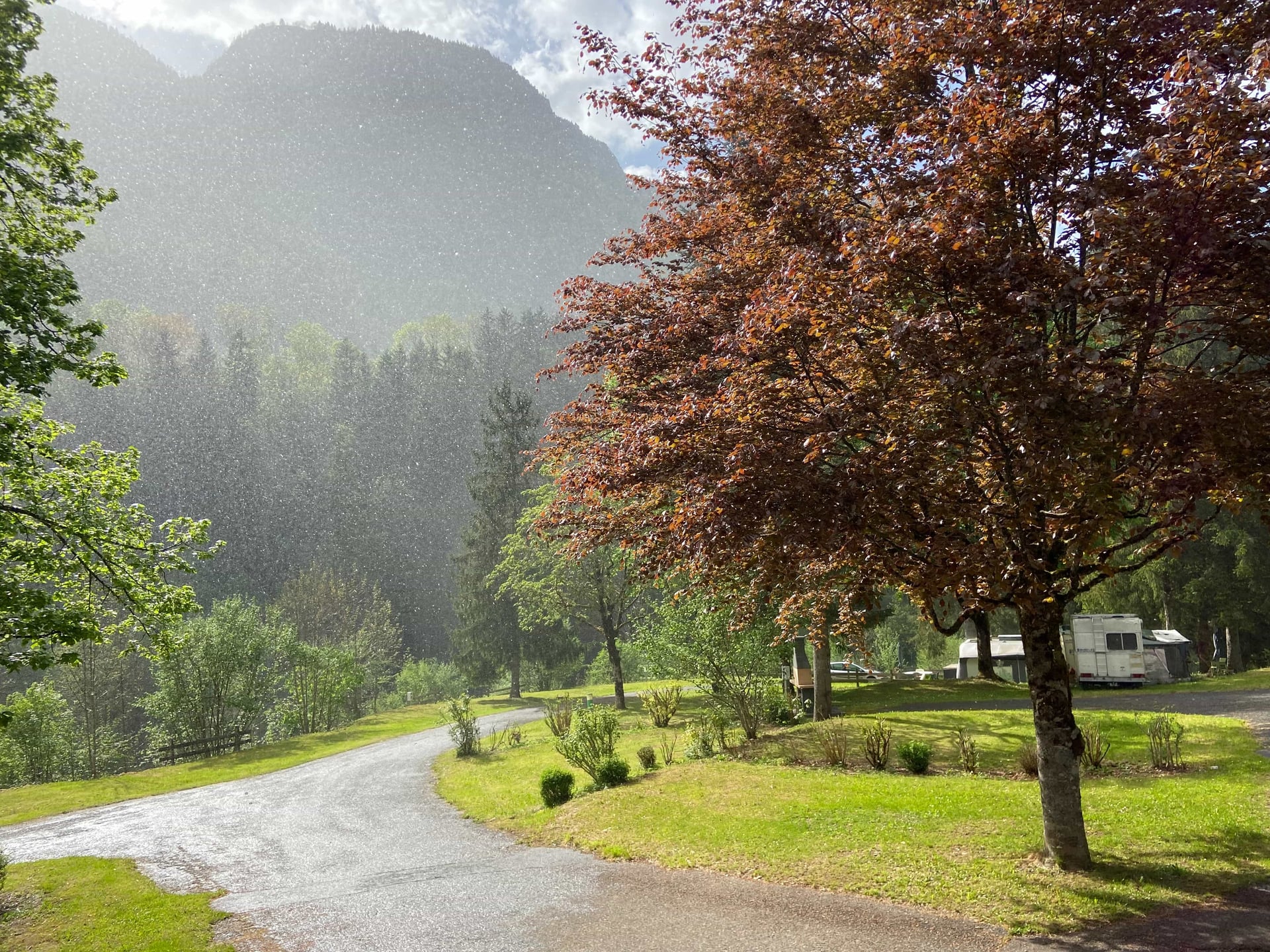
Around the campsite, this heritage is best explored on foot. The hamlets trail, which passes right by the campsite, goes down to the Sainte-Renée chapel at Beffay, on the banks of the Borne, and passes sulphur springs: one signpost nearby is even called "Vers les Bains" ("towards the baths"). The chapels of La Ville in Le Petit-Bornand, and of La Rivière and Le Regard in Entremont, also dot the valley.
Discover the village today
Restaurants, craftspeople and the Sunday-morning market: everyday life in Glières-Val-de-Borne, a few steps from the campsite.